Solar-terrestrial observatory
Telluric
Watch the coupling between the Sun and the Earth — solar wind, geomagnetism, global seismicity, the ELF cavity, and the geometry of the planets, as they stand right now.
The Sun
Earth-facing disk
Corona, ~1.5 MK
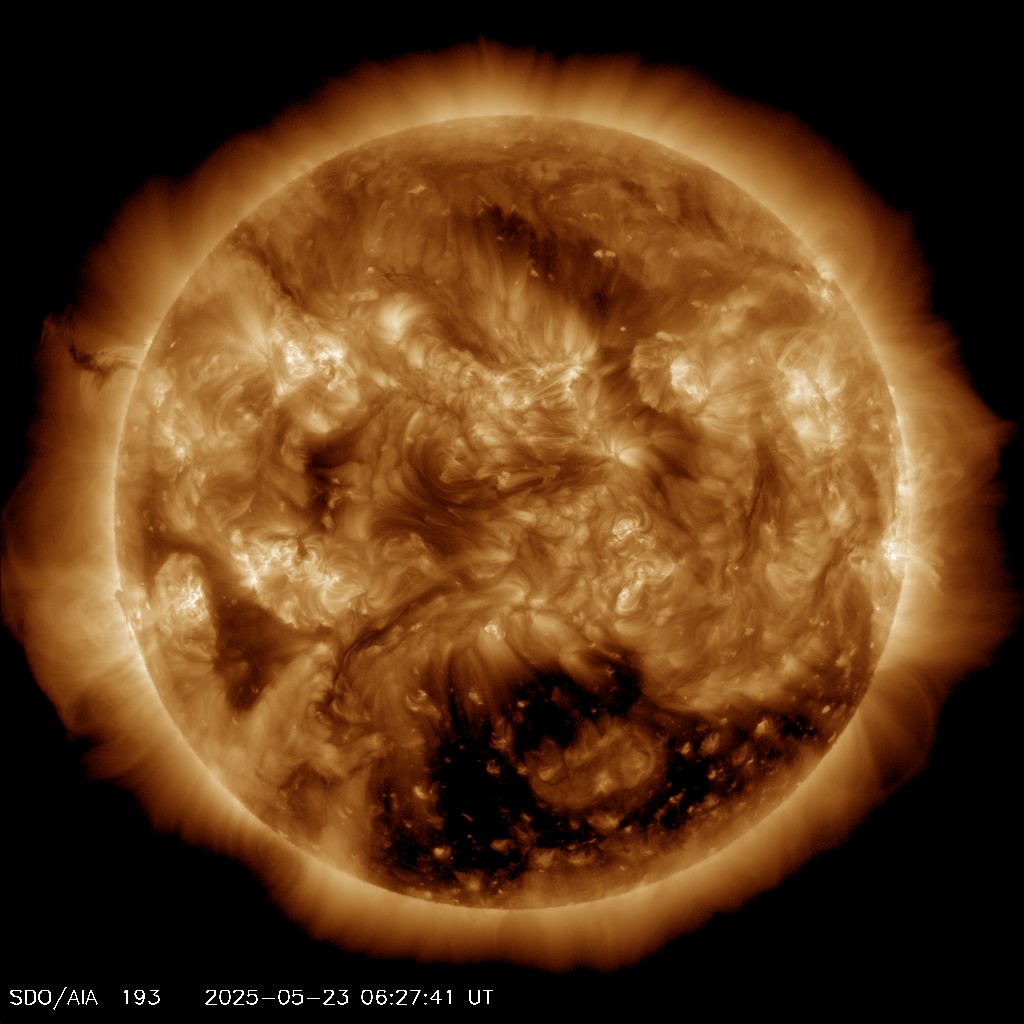
Latest frame from NASA Solar Dynamics Observatory, refreshed on a 15-minute cadence.
Space weather
Solar wind and geomagnetic field
Kp
0.0
Quiet
Solar wind
470
km/s at L1
Bz
1.0 nT
northward
Bt
4.0 nT
IMF magnitude
X-rays
B5.7
GOES long channel
F10.7
129
sfu
Planetary Kp
GOES X-ray flux 0.1–0.8 nm
Seismic field
Global seismicity
Dots are M4.5+ this week (USGS). Size is magnitude, brightness is recency. Sage ovals mark an approximate aurora equatorward boundary from current Kp. The small disc is the subsolar point.
Earth–ionosphere cavity
Schumann resonances
n=1
7.83 Hz
n=2
14.3 Hz
n=3
20.8 Hz
n=4
27.3 Hz
n=5
33.8 Hz
Waterfall is a physically informed model of the ELF cavity (peaks at the first five Schumann modes), driven by current Kp — not a live magnetometer. The tone is a binaural beat (200 / 207.83 Hz), an audible analog of 7.83 Hz, not the resonance itself.
Last 24 hours
Recent events
- M3.2
14 km E of Pearsall, Texas
29m ago · 8 km
- M4.1
215 km WSW of Port McNeill, Canada
1h ago · 10 km
- M4.5
off the coast of Oregon
1h ago · 10 km
- M2.5
60 km NW of Ninilchik, Alaska
3h ago · 103 km
- M2.5
21 km NNE of Sterling, Alaska
3h ago · 0 km
- M2.8
95 km SSW of Kaktovik, Alaska
3h ago · 8 km
- M3.6
102 km SSW of Kaktovik, Alaska
4h ago · 5 km
- M2.5
51 km W of Akhiok, Alaska
5h ago · 5 km
Heliocentric geometry
Planetary field
Moon
Waxing crescent
9% illuminated
Sun–Moon
35°
Intermediate lunar tide
Clustering · 3 bodies in 40°
- Mars–Jupiter conjunction1.4°
- Saturn–Neptune conjunction6.8°
Longitudes are true-of-date ecliptic. Orbital radii are schematic, not to scale.
Field reading
What the instruments say
The geomagnetic field is quiet. Solar wind is elevated at 470 km/s. Interplanetary Bz is 1.0 nT (northward), which tends to close the magnetosphere to solar-wind coupling. Soft X-rays sit in class B5.7. In the last 24 hours the seismic field released 2.80 × 10¹³ J across 40 events M2.5+, largest M5.4 South Sandwich Islands region. Sun–Moon elongation is 35°.
Deeper briefing
Easy words. Terms explained as they appear.
The first reading is assembled directly from NOAA and USGS numbers. The deeper briefing interprets those numbers — in plain language or technical terms — without predicting earthquakes.